External Link External Link

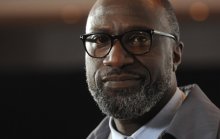
George Amponsah

Director

George Amponsah is a critically-acclaimed director who has made numerous documentaries, including features such as The Fighting Spirit 2007), about boxers from Ghana in pursuit of the American dream, and The Importance of Being Elegant (2004), about a bizarre cult of fashion led by the flamboyant Congolese singer Papa Wemba.

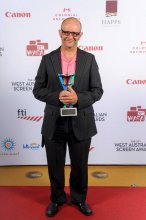
Richard Todd

Director, Producer

Richard Todd produces provocative films, specialising in character-driven, social issues and natural history documentaries that have a positive impact on people, society and the environment. He’s worked with international companies and distributors including ABC, Discovery Channel, BBC and National Geographic.

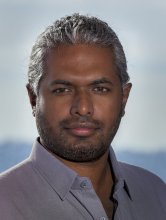
George Kurian

Director

George Kurian is a documentary filmmaker and photojournalist currently based in Istanbul. He has lived and worked in Afghanistan and Egypt and he has worked in Syria, Iraq, Iran, Egypt, Turkey and South Asia. He has worked on a range of documentaries from current affairs and history to human interest and wild life.

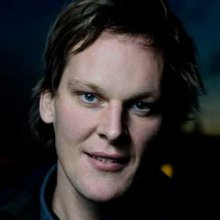
Andreas Koefoed

Director

Director Andreas Koefoed has directed several character driven documentaries. His latest documentary “The Arms Drop” from 2014 about Danish Niels Holck and English Peter Bleach, was nominated for a Bodil award, and has been shown in more than 15 countries. Andreas Koefoed’s films have been selected for festivals all over the world, and has among others won awards at Tribeca Film Festival, Silverdocs, Full Frame, Sheffield Doc/Fest and CPH:DOX.

Mohammed Ali Naqvi

Director

Living between Pakistan and New York, Emmy-winning filmmaker Mohammed is a fellow of the National Endowment for the Arts and American Film Institute's Project 20:20 program. His work has received numerous awards, including the Amnesty Human Rights Award and the United Nations Association Festival Grand Jury Award, and has been showcased at the Museum of Modern Art. His documentary credits include Shame (Showtime-Toronto, IDFA, Tribeca), Pakistan's Hidden Shame (Channel 4, NHK, SVT, Sheffield, UNAFF), Shabeena's Quest (Al Jazeera), andTerror’s Children (Discovery). Mohammed has produced two narrative feature films, Big River and I Will Avenge You Iago, starring Giancarlo Esposito and Larry Pine, and recently directed the narrative short Happy Things in Sorrow Times. Mohammed is also the founder of MuNan Pictures, an independent production house which has developed programing for Showtime, Channel 4, NHK, Al Jazeera, SVT, CNN, MTV, Current TV, New York Times Television, and has recently worked with Oprah Winfrey's Harpo Productions.

Hemal Trivedi

Producer, Director, Editor

Hemal has been a Mumbai and New York City-based documentary film editor/director for over a decade. Her credits include Outlawed in Pakistan (Editor, Emmy 2014, PBS Frontline, Sundance); Saving Face (Editor, Oscar 2012, Two Emmys 2013, HBO/Channel 4); Shabeena’s Quest (Director/Editor, Witness, Al Jazeera); Flying on One Engine (Editor, SXSW, IDFA); Laughter (Editor, BBC); When the Drum is Beating (Editor, ITVS, Tribeca 2011); and Beyond Mumbai (Director, Camera & Editor, OWN, 2011 Webby nomination). She has produced and edited over 50 award-winning shorts for Odyssey Networks.

Matt Timblin

Matt Timblin is the director of security at Human Rights Watch, overseeing security, related risk and crisis management across the organization’s global work footprint. He has travelled extensively and spent over two decades, in various roles, operating in some of the world’s highest risk and most challenging environments. After a 12-year career in the British Army, Matt spent over five years in the Middle East and Central Asia as a security and risk contractor and consultant for various organizations. Prior to his current position he worked for the British Broadcasting Corporation (BBC) as a permanent adviser to news crews, documentaries and independent production companies filming in insecure areas worldwide. In this role he helped in the progression of many of the organization’s current security related policies and processes to support and enable news coverage and filmmaking in hostile and high risk environments. During his time at the BBC he worked with journalists on the ground at major world events including the Arab Spring, the Syrian conflict, the protests in Cairo and Gezi Park as well as working on documentaries in Mexico, Colombia, Afghanistan and Yemen amongst others. 

James Brabazon

James Brabazon is a journalist and documentary filmmaker. Based in the United Kingdom, he has travelled to over 70 countries, investigating, filming, and directing in the world’s most hostile environments. He is the author of the international bestseller My Friend the Mercenary, a memoir recounting his experiences of the Liberian civil war and the Equatorial Guinea coup plot. He is currently the commissioning editor for the Foreign Film Fund, Channel 4 News. James first gained an international profile as the only journalist to film the Liberian LURD rebel group fighting to overthrow President Charles Taylor. James’s work has often involved filming close-quarter combat, for which he was awarded the IDA Courage Under Fire Award 2004 and the Rory Peck Trust Sony International Impact Award 2003.

Kim Longinotto

filmmaker

Kim Longinotto is a British documentary filmmaker, well known for making films that highlight the plight of female victims of oppression or discrimination. Longinotto studied camera and directing at the National Film and Television School in Beaconsfield, England, where she tutors occasionally. While studying, she made a documentary about her boarding school that was shown at the London Film Festival. She continues to be a prolific documentary filmmaker. 

Charif Kiwan

co-founder and spokesperson, Abounaddara Collective

Charif Kiwan is the spokesperson for the anonymous filmmaking collective known publicly as Abounaddara, who formed in 2010 and began posting short films weekly on Fridays in April 2011—one month after the start of large-scale demonstrations throughout Syria. The collective’s first post included a manifesto titled Que faire? (What to do?), which addressed the need to represent the reality on the ground in Syria while respecting human dignity. What was initially a close group of self-taught filmmakers in Damascus grew into a larger collective of anonymous and voluntary filmmakers that incorporates many voices and perspectives, telling the stories of Syrians living amid the social turmoil that has since become an ongoing civil war. Collectively sharing files online or smuggling flash drives with traveling friends, Abounaddara posts one video each week, working in what they call “emergency cinema” to highlight the urgency of the moment, the need to bear witness, and the importance of producing images that counter state television broadcasts. 

Subscribe to