
In the early 1980s, death squads roamed the Guatemalan countryside in a war against the unarmed indigenous population that went largely unreported in the international media.
When the Mountains Tremble
Synopsis
In the early 1980s, death squads roamed the Guatemalan countryside in a war against the unarmed indigenous population that went largely unreported in the international media. Filmmakers Pamela Yates and Newton Thomas Sigel threw themselves into the task of bringing the crisis to the world's attention by making a documentary that took them into remote areas of the country where civilian massacres were taking place. Central to their story is Rigoberta Menchú, a Maya indigenous woman who was spurred into radical action by the murders of her father and two brothers.
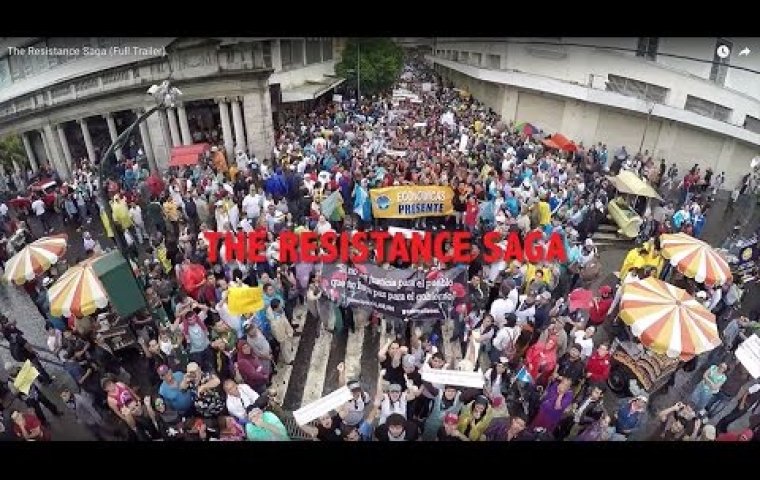
When the Mountains Tremble will be shown on June 11 as part of The Resistance Saga. The Resistance Saga is a cinematic project designed to galvanize audiences to fight back when society is faced with authoritarianism and demagogues, and celebrate the role that the arts can play in creating, strengthening, and communicating narratives of nonviolent resistance. In so many ways, indigenous peoples throughout the Americas have set the example of long-term courageous and strategic resistance against daunting odds, with a powerful example being the saga of the Mayan people as depicted in director Pamela Yates’ films When the Mountains Tremble, Granito: How to Nail a Dictator and the latest installment, 500 Years: Life in Resistance. The event is a day-long immersive gathering that includes the screening of all three films, with two 15-minute intermissions, followed by a discussion on long-term movement building with the Mayan women protagonists, and a reception and concert by Mayan singer/songwriter Sara Curruchich singing her inspiring songs of resistance.
All three films of the Guatemalan trilogy have premiered at the Sundance Film Festival during the past 35 years. When the Mountains Tremble (1983) introduced indigenous rights leader Rigoberta Menchú as the storyteller in her role to expose repression during Guatemala’s brutal armed conflict. Winner of the Special Jury Award at Sundance, the film was seen worldwide and translated into 10 languages. It helped put Menchú on the world stage and 10 years later she was awarded the Nobel Peace Prize. Yates’ sequel, Granito: How to Nail a Dictator (2011) is a political thriller about the building of a genocide case against Guatemala General Efraín Ríos Montt. The case included outtakes from When the Mountains Tremble as forensic evidence in the prosecution of Montt. The third film, 500 Years: Life in Resistance, picks up where Granito leaves off, providing inside access to the first trial in the history of the Americas to prosecute the genocide of indigenous people. Driven by universal themes of justice, power, and corruption, the film provides a platform for the majority indigenous Mayan population, which is now poised to reimagine their society.
The Resistance Saga will take place at the Walter Reade Theater, Film Society of Lincoln Center on Sunday June 11 beginning at 1:30pm. There will be 15 minute intermissions after the first and second films, and a discussion after the third film, followed by a reception and concert for tcketholders in the Furman Gallery, Film Society of Lincoln Center. A special ticket package is available for The Resistance Saga trilogy at Film Society of Lincoln Center. Purchase tickets to all three films and the reception for $20.